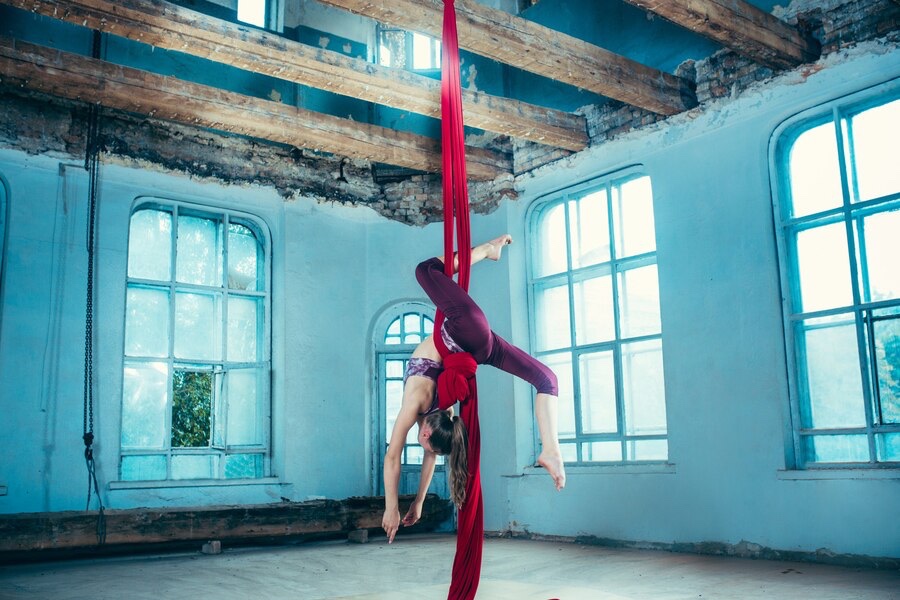
The idea of hanging upside down might sound like a nightmare, but once you get over the initial fear and disorientation, invert therapy can be a ton of fun. And who knows, maybe you’ll even enjoy seeing the world from a new perspective – quite literally!
Aerial therapy is a unique and exciting form of exercise that involves performing various movements and poses while suspended in the air using silks, hammocks, or other aerial equipment. A major aspect of aerial therapy is invert therapy, which involves hanging upside down or at an angle. In this blog post, we will explore the benefits of invert therapy and some of the contraindications to keep in mind.
“Inverting the body in the aerial arts can be a therapeutic experience that encourages personal growth and development.”
– Lockard and Schertz, American Journal of Recreation Therapy.

BENEFITS OF INVERT THERAPY
- Decompression of the Spine: Invert therapy provides a natural way to decompress the spine, which can help alleviate back pain and improve posture. By hanging upside down or at an angle, the body’s weight is shifted, allowing the vertebrae to expand and create more space between them. This decompression can relieve pressure on the discs, nerves, and other structures in the back.
- Improved Circulation: Invert therapy can also improve circulation throughout the body. When hanging upside down or at an angle, gravity helps to pull blood towards the upper body, improving circulation to the brain and other organs. This increased blood flow can provide a natural boost of energy and help to reduce swelling in the legs and feet.
- Strengthening of Core and Upper Body Muscles: Invert therapy requires a significant amount of strength and stability to maintain the positions and movements. By engaging the core and upper body muscles, invert therapy can help improve overall strength, stability, and flexibility. These benefits can translate into improved athletic performance, better balance, and reduced risk of injury.
- Mental Health Benefits: Invert therapy can also provide significant mental health benefits. By engaging in a fun and challenging activity, aerial therapy can help reduce stress and anxiety, improve mood, and boost self-confidence. Invert therapy can also promote mindfulness, as it requires a great deal of focus and concentration.
“Inversion traction appears to be beneficial in increasing the intervertebral disc space.”
– Knight and Draper
CONTRAINDICATIONS
While invert therapy can provide many benefits, it is important to keep in mind that it may not be suitable for everyone. Here are some of the contraindications to keep in mind:
- High Blood Pressure: Invert therapy can increase blood flow to the head and may cause a sudden drop in blood pressure, which can be dangerous for individuals with high blood pressure or other cardiovascular conditions.
- Glaucoma: Invert therapy can also increase pressure in the eyes, which can be dangerous for individuals with glaucoma.
- Pregnancy: Invert therapy is generally not recommended for pregnant women, as the sudden changes in blood pressure and increased pressure on the abdomen can be harmful to the developing fetus.
- Herniated Discs: Individuals with herniated discs or other spinal injuries should avoid invert therapy, as it can exacerbate these conditions.
In conclusion, invert therapy can provide a unique and exciting way to improve spinal health, circulation, strength, and mental well-being. However, it is important to consider any contraindications and speak with a healthcare provider before beginning any new exercise regimen. With proper guidance and precautions, invert therapy can be a safe and effective way to improve overall health and fitness.
Disclaimer:
I want to make it clear that I am not a doctor. I’m just a friendly Aerialist COTA here to offer some insights. Please consult with a qualified healthcare provider before attempting any new exercise regimen. Now that we’ve got that out of the way, go try the world of invert therapy!
References
- “The effects of inversion traction on spinal column configuration, heart rate, blood pressure, and perceived discomfort.” Knight KL, Draper DO. Journal of Athletic Training. 1993; 28(4): 320-324. PMID: 16558120
- “The effects of inversion on cerebral circulation and cognitive performance.” Barrows JL, Fleishman JV. Alternative Therapies in Health and Medicine. 1999; 5(2): 94-100. PMID: 10094230
- “Aerial arts as therapy: exploring the therapeutic potential of an emerging art form.” Lockard AJ, Schertz KE. American Journal of Recreation Therapy. 2018; 16(3): 13-25.
- “The effect of aerial silk exercises on balance, functional mobility, and muscle strength in older women.” Cho SY, Kwon JW, Kim SK. Journal of Physical Therapy Science. 2017; 29(5): 839-842. doi: 10.1589/jpts.29.839
 OT Aerialist
Leave a comment